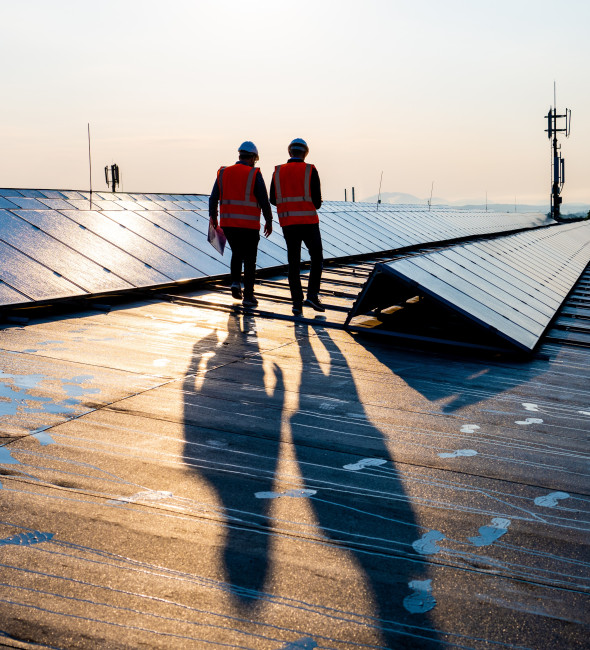
Photo by UNclimatechange via Flickr

Achieving climate and biodiversity goals requires strong government leadership, pressure for change from civil society, and coordinated monetary and fiscal policy to support large public investments.

Governments spend financial resources raised from revenues, debt and even (more controversially) money issuance to support public policy and buy goods and services for their operations. Given this, governments are typically the biggest allocators of capital even in market-based economies.

Public finance is a critical tool to achieve public policy aims like climate and nature protection — it can support those aims directly, help steer private markets to support them, decrease the economic and political costs of future climate policies, and direct resources to underserved and/or marginalized communities to help make the transition to a green economy more equitable.

Yet, investments to date have been insufficient to address the scale of our climate and nature crises. To limit greenhouse gas (GHG) emissions in line with the Paris Agreement and halt biodiversity loss, we must rapidly scale up public investment.

Increasing public investment will be especially crucial in areas where private finance is insufficient for the pace and speed necessary, such as public services and infrastructure; research, development, demonstration and commercialization of new technologies; reaching underserved and/or marginalized groups; and job training. Early, targeted and large-scale public investments can also play a vital role in catalyzing and mobilizing shifts in the private sector.

Importantly, governments will need to simultaneously increase investments in climate and nature, phase down subsidies and investments that are detrimental to the climate and environment, and create policies that discourage pollution and ecosystem damage.

Estimates suggest that global public investment in climate measures from both domestic and international sources should increase to at least $3.8 trillion a year by 2030. Finance flows to developing countries should also increase to meet the recent global commitment of $300 billion a year and work toward $1.3 trillion, investments in nature-based solutions should triple, and biodiversity financial resources need to increase to at least $200 billion per year.

To unleash the power of the public sector in achieving these climate and biodiversity goals, we need government leadership that reflects the urgency of climate action, persistent demand for accelerated change from civil society, public financial institutions designed for these goals, and coordinated monetary and fiscal policy to support large public investments.
Tracking progress on global outcomes

2248: Capital investment in the low-carbon energy system

Status: Well Off Track
Historical Data Methodology and Challenges:
  • The total values were calculated by adding renewables, battery storage, electricity networks and end-use.
  • “Grids and storage” annual values were calculated by adding battery storage and electricity networks.
  • “Other low-carbon energy” annual values were calculated by subtracting “renewable power,” “grids and storage,” and “energy efficiency and end-use” from the total amount of clean energy.
Target Methodology:

According to IEA’s Net Zero 2050 scenario, investments in low-carbon, clean energy need to scale up to about $4.56 trillion by 2030.

The public sector regulates and incentivizes private economic activity, but it also makes capital investments directly. Governments, public financial institutions and state-owned enterprises make investment decisions to create or maintain physical fixed assets like public buildings, infrastructure and vehicle fleets. These assets can produce greenhouse gas (GHG) emissions directly, demand energy or other emissions-intensive inputs, or enable the emissions of other economic actors. Combined, private sector capital investment and public sector decisions to invest in capital or incentivize private capital formation are the pivotal financial decisions driving the GHG emissions or decarbonization of the energy system.

To decarbonize the economy, the public sector will need to replace capital investments that create and maintain high-carbon assets — or produce emitting products — with low-carbon alternatives. The good news is that capital investment in the low-carbon economy has begun to take off. The International Energy Agency (IEA) expects $2.2 trillion of capital investment in 2025 in the low-carbon economy, comprising clean power and fuels, batteries, electric vehicles, carbon capture and storage, and greening buildings. According to the IEA’s Net Zero by 2050 scenario, however, clean energy capital investment will need to grow three times faster and reach about $4.6 trillion by 2030 in order to replace the high-carbon economy and meet society’s growing demands.

2249: Public climate finance

Status: Well Off Track
Historical Data Methodology and Challenges:

Data was compiled from successive editions of the Global Landscape of Climate Finance report series. Data from 2011-2016 was sourced from the 2022 edition, 2017 from the 2023 edition, and 2018-2023 from the 2025 edition. Due to a methodology change in the latest 2025 report, values from 2011-2017 are not comparable to values in 2018-2023.

Target Methodology:

To limit temperature rise to 1.5 degrees C (2.7 degrees F) and build climate-resilient societies, estimates suggest that $6.9 to $11 trillion of climate finance per year will be required by 2030 and $6.8 to $12 trillion by 2035, sustained through 2050.

It is difficult to determine the precise breakdown between public and private finance needed to meet climate goals, given that such a disaggregation depends on the social and political choices made by societies, institutions and governments about the ideal mix of market and state intervention in economies. The Independent High-Level Expert Group on Climate Finance (IHLEG), an independent group launched by the COP26 and COP27 Presidencies to provide policy recommendations to scale up public and private investments for climate action, estimated the public and private finance necessary to meet climate mitigation, adaptation, loss and damage, just transition, and nature investment goals in emerging markets and developing countries (excluding China) by 2030, with 55 percent coming from public sources and 45 percent from private ones. The group found that most finance is needed for the clean energy transition, natural capital and adaptation, largely in line with the categories of needs identified in the sources and scenarios analyzed by the Climate Policy Initiative.

While the IHLEG estimates are limited to the context of developing countries, they can serve as a useful proxy for global estimates in the absence of more comprehensive public and private climate finance targets at the global level. The distribution broadly aligns with historical global climate finance flows from 2012 to 2022, with public and private climate finance being about equally balanced. We estimate that 55 percent of global climate finance needs will come from public sources and 45 percent from private sources to derive targets for global public climate finance and global private climate finance.

The composition of climate finance flows is likely to change, as seen in the private share rising to 66 percent in 2023, and the reasonable expectation that private finance will play a larger role in advanced economies and in mitigation efforts over adaptation, especially for commercially mature solutions. The public-private mix may be revised in the future to reflect new estimates and improvements in tracking climate finance flows. This indicator includes both domestic and international flows.

Using IHLEG estimates as a reference, we assume “other concessional finance” to be public given that concessional finance has often originated from public sources and the nonconventional sources of funding contemplated like the international taxation of high-emitting sectors and issuance of the International Monetary Fund’s special drawing rights. Other sources of finance classified as public are public finance, multilateral development banks, bilateral finance and South-South cooperation.

Scaling up public climate finance is necessary to ensure a rapid transition to a decarbonized, resilient world. It plays a vital role, especially in areas where private finance is unwilling or not well-suited to meet climate objectives at the speed and scale necessary, such as public services and infrastructure (for example, transportation and energy networks); research, development, demonstration and some commercialization of new low-carbon technologies; and ecosystem protection. Public finance can also mobilize private finance, enabling greater investments in climate solutions. Additionally, public climate finance can be deployed to ensure equitable outcomes and a just transition. Public climate finance is delivered through different channels and actors, most notably development financial institutions (DFIs) — national and multilateral — and state-owned financial institutions.

It is difficult to determine the precise ideal breakdown between public and private finance needed to meet climate goals, given that such a disaggregation depends on the social and political choices made by societies, institutions and governments about the ideal mix of market and state intervention in economies. Historical data from 2012 to 2022 shows a roughly equal split between public and private climate finance, with some estimates suggesting that 55% of climate finance necessary to meet climate, nature and just transition goals in developing countries (excluding China) will need to come from public sources.

In 2023, public climate finance flows amounted to around $650 billion, a 13% percent drop from 2022, due to large-scale fiscal contractions among the world’s governments — and with further declines possible given the recent reduction of foreign aid budgets in several developed countries. This decline needs to be reversed. Public climate finance will need to accelerate more than six times the current trajectory to reach the estimated $3.8 to $5.9 trillion per year target for 2030. Reaching the $4.9 trillion per year midpoint of the target range will require an average increase in investment of about $600 billion per year between 2023 and 2030.

2250: Public finance for nature-based solutions

Status: Insufficient Data
Historical Data Methodology and Challenges:

Public finance numbers were sourced exclusively from the State of Finance for Nature 2026 report and includes those from Domestic Government and Public Overseas Development Assistance (ODA). The total public finance figures displayed on the platform are the sum of the annual public finance figures shown in Fig. 8 of the State of Finance for Nature 2026.

2252: Finance for biodiversity

Status: Insufficient Data
Historical Data Methodology and Challenges:

Public biodiversity amount, the lower-end value of international public biodiversity amount ($3.9-$9.3 billion per year), and lower-end value of private biodiversity finance ($6.6-$13.6 billion per year) were sourced from the OECD Comprehensive Overview of Global Biodiversity Finance report. 

Target Methodology:

According to the Kunming-Montreal Global Biodiversity Framework adopted in 2022, financing from all sources toward biodiversity preservation and protection need to reach $200 billion per year by 2030.

Major funding is needed to halt biodiversity loss and preserve wildlife and natural habitats. The Kunming-Montreal Global Biodiversity Framework adopted in 2022 identified the need to increase financial resources to at least $200 billion per year by 2030, and suggested increasing international financial flows to developing countries by at least $30 billion per year from public and private sources.

The devastating loss that the extinction crisis could bring to the global economy and society is incalculable. Business sectors that directly rely on biodiversity will also experience losses in profitability and risk their long-term survival unless biodiversity is protected.

For example, $235–577 billion in annual global food production is dependent on the contribution of animal pollinators, while coral reefs generate $36 billion in ecotourism every year. Finance can protect biodiversity using different instruments, from direct government expenditures and incentives for environmentally sustainable practices to philanthropic and private investments in nature-based solutions.

Leveraging public finance will be essential to reach these goals, yet recent trends fall short. Between 2015 and 2017, global biodiversity finance totaled $78.3 billion annually, with public sources providing at least $71.7 billion per year and private sources contributing at least $6.6 billion. Total biodiversity finance will need to nearly triple to reach $200 billion by 2030, and will need to grow at an average rate of $10 billion per year between 2017 and 2030 to meet that goal.

Key enablers and barriers to change

2174: Public investments in low-carbon energy research, development and demonstration

Historical Data Methodology and Challenges:

Drawing from IEA data, values for regions were summed to get global numbers. The global total energy RD&D budget was then multiplied by the global share of low-carbon each year to calculate the budget for low-carbon RD&D.

Governments play a crucial role in catalyzing the technological innovation needed to drive an environmentally sustainable and decarbonized economy. Historically, governments have a strong track record of supporting important stages of technological innovation. Early stages of innovation, from research through technology commercialization, benefit immensely from government support; without it, many technologies would be left undiscovered or meet insurmountable investment challenges before making it to the market. This is particularly true for low-carbon energy technologies, where highly impactful innovations are capital-intensive and require long time horizons.

According to the International Energy Agency (IEA), in 2023 global public spending on research, development and demonstration (RD&D) for low-carbon energy innovation grew by about 2% to reach $38.2 billion. It represents about 77% of total public energy RD&D spending.

Some examples of low-carbon and zero-emission technologies still requiring early-stage innovation are green building materials, long-duration electricity storage and zero-emission industrial heat. Public investments in later stages of the innovation cycle that bring technologies to commercial readiness are less well tracked.

One study estimated public investment in commercialization to have reached about $6 billion in 2020. With the recent expansion of green industrial policies in the United States and European Union, this amount has probably increased considerably. Commercialization data will be included as data becomes available.

2175: Countries adopting green budgeting

Green budgeting entails reviewing government budgets to identify how all aspects of public expenditure affect environmental policy aims. It helps governments work across the entire public budgetary policy-making process to achieve environmental and climate goals. Green budgeting leads to more coherent policy making by analyzing the ways in which all elements of a government budget help or hinder the achievement of climate and environmental objectives. 

Green budgeting can make public expenditures more accountable to public interests by enhancing the transparency between the government and civil society.

Green budgeting strategies generally involve systems that encourage integration of environmental priorities into budget decision-making, and help governments monitor whether public budgets are supporting environmental policy goals. 

An increase in the number of countries adopting green budgeting will indicate that more governments are on track to implement policies that promote positive social, economic and environmental outcomes. As of 2022, 24 out of 38 member countries of the Organisation for Economic Co-operation and Development (OECD) had adopted some form of green budgeting, up from 14 in 2021.

2177: Blended finance supportive of the Sustainable Development Goals in developing countries

Historical Data Methodology and Challenges:

The category “Other” is calculated as the difference between “Total” blended finance and “Climate” blended finance.

The public sector can catalyze private investment by assuming risks that the private sector may be unwilling to take in any given sector, technology, geography or market. If the investments are successful, the private sector becomes more likely to continue to invest.

The public sector can also mobilize private capital through concessional finance, where the development finance institution accepts below-market returns because of the public benefit of the project. Philanthropy and impact investors can also catalyze private investment — and can often bear more risk than the public sector — albeit with fewer total resources than those available to governments.

Increased public, philanthropic and impact investment can generate more private capital in climate solutions and sustainable development, especially in developing and emerging markets and technologies. According to Convergence, blended finance flows to achieve the Sustainable Development Goals in developing countries totaled $15 billion in 2023, while climate blended finance reached $11.6 billion. This shows an increase by about 71% and 107%, respectively, as compared to 2022 totals, driven by improvements in macroeconomic conditions affecting developing countries, including easing inflationary pressures and the resilience of local currencies.

2178: Sovereign green bonds issuance

Sovereign green bonds — debt raised by governments from investors — fund public sector expenditures that bring positive environmental and climate benefits. When used appropriately, these bonds help governments promote economic resilience and a more sustainable economy, and are also a means for investors to allocate private capital from their portfolios for sustainable activities.

Countries that issue green bonds highlight their commitment to the environment and send an important political signal to the private sector to accelerate action. India, Colombia, Germany, Spain and the United Kingdom, among others, have already issued sovereign green bonds and have allocated proceeds to clean transportation, green buildings, sustainable water management and pollution prevention projects.

The more sovereign green bonds countries issue, the more financial resources governments will have to accomplish their climate and environmental goals. In 2022, about $81 billion was raised via sovereign green bonds across seventeen  countries, an 11% increase from the previous year.

2179: Allocation of IMF's Special Drawing Rights to low- and middle-income countries

Historical Data Methodology and Challenges:

G20 countries were filtered out from the list of countries. Cumulative allocations for all countries except G20 countries were added to get the total allocation of SDRs to low- and middle-income countries.

Special Drawing Rights (SDRs) are issued by the International Monetary Fund (IMF) as unique international reserve assets, currency or assets that are readily transferable for balance of payment and currency exchange transactions. They can be converted into five currencies: the U.S. dollar, euro, Chinese yuan, Japanese yen and pound sterling.

SDRs are especially helpful in strengthening the financial resilience of emerging and developing countries because they can boost currency reserves, stabilize domestic currencies, and pay down debt denominated in a foreign currency. Although SDRs are not directly linked to climate change, they are a readily available tool to help low-income countries navigate financial shocks. It is impossible for low-income countries to navigate climate impacts, or a green transition, while facing financial crises.

Because of an allocation policy that prioritizes countries with larger economies, most SDRs are not allocated to low-income countries. Barely 3% of the latest SDR 456 billion ($650 billion) allocation of SDRs in 2021 went to low-income countries. There have been requests to change the allocation formula and calls for developed countries to redirect their SDR allocations to vulnerable countries. An increase in SDR allocations to developing countries could also, in principle, constitute a form of climate reparations.

Tracking SDR allotments channeled to low- and middle-income countries can help indicate whether low- and middle-income countries are receiving the support they need to enhance resilience. As of January 2024, the cumulative allocations of SDRs to non-G20 countries amounted to SDR 129 billion, up from only 43 billion in 2019 but unchanged since the end of 2021.

2180: Countries with biodiversity-relevant subsidies

Tracked by the Organisation for Economic Co-operation and Development (OECD), biodiversity-relevant subsidies are one of four main types of economic instruments related to biodiversity that can mobilize finance and generate revenue. The others are biodiversity-relevant taxes, fees and charges, and tradable permits.

Biodiversity-relevant subsidies channel public finance toward sustainable forest management, reforestation and land conservation, and sustainable agricultural practices. The post-2020 global biodiversity framework identified the need to increase biodiversity finance to at least $200 billion per year by 2030, including $10 billion to developing countries per year. As of 2023, there were 28 countries with biodiversity-relevant subsidies, rising slowly from five in 1980.

2181: Public support for increased public investments in the green economy

Historical Data Methodology and Challenges:

Data was sourced directly from the UNDP The Peoples' Climate Vote report by reporting countries.

Data only includes G20 countries.

G20 countries have the responsibility — and the resources — to reform their economies through green jobs, businesses and investments. Political leaders, especially in democratic governments, are more likely to increase public spending on green investments if there is strong, organized popular demand from the general public.

Polling that indicates positive popular sentiment can be a leading indicator for greater public green investments to transition toward a green economy. Public support for public green investments will be tracked when corresponding data is identified and made available. 

In the meantime, the polling from the U.N. Development Programme’s Peoples’ Climate Vote, the largest public opinion survey on climate change, can be used as a proxy. It found that 12 of the G20 countries have majority support for increased investments in green businesses and jobs. The United Kingdom boasts a 73% approval rate, while Germany, Australia and Canada all have 68% approval rates. 

2880: Government support for agricultural research, education and technical assistance

Historical Data Methodology and Challenges:

OECD data on “Producer Support Estimates (PSE)” and “General Services Support Estimates (GSSE)” was reorganized into the categories from the World Bank report Revising Public Agricultural Support to Mitigate Climate Change (Searchinger et al. 2020) to determine what amount of agricultural subsidies went toward "research and technical assistance" outcomes. 

The amount of agricultural subsidies that support research and technical assistance was calculated by adding the total spending for “research, education and technical assistance.”

Agriculture is a major beneficiary of government subsidies and a primary driver of land degradation and soil and water pollution. The United Nations Environment Program (UNEP) estimates that harmful agricultural subsidies totaled $345 billion in 2022. Subsidies to support agricultural producers are projected to triple to $1.8 trillion by 2030.

Rather than continue business-as-usual practices that exacerbate the overuse of natural resources and catalyze biodiversity loss and pollution, government spending can be re-oriented to research, development and implementation of sustainable agricultural innovations. Improvements in productivity would no longer depend on toxic pesticides and resource exploitation, but on improved farming techniques and technologies. Higher proportions of such government funding will have many spillover benefits, such as increasing crop yields, avoiding land-use changes and reducing greenhouse gas (GHG) emissions.

According to the International Food Policy Research Institute (IFPRI), global spending from public, nonprofit and higher education sources toward agricultural research amounted to $46.8 billion in 2016, a 51% increase from 2000. Other studies estimate about $60 billion of annual funding on agricultural research and innovation for emerging and developing countries between 2010 and 2019, with 60%-70% coming from public sources. However, less than 7% of the total funding targeted sustainable agricultural innovation.

In 2021, according to the Organisation for Economic Co-operation and Development (OECD), governments alone allocated $34.8 billion to agricultural research, education and technical assistance. This was in line with historical averages and corresponded to about 8% of total direct government agricultural spending. These amounts aren’t exclusively for sustainable agricultural research, so it’s likely that some of the support is being directed to harmful technologies and practices. The indicator will track support to sustainable agricultural research once the breakdown becomes available.

2912: Countries with green public procurement practices in their procurement strategies and regulations

Historical Data Methodology and Challenges:

The list of countries with green public procurement practices was provided by report authors. 

Green public procurement involves making the government’s process of sourcing and purchasing materials and supplies more sustainable and aligned with climate and environmental goals.

Government procurement from countries in the Organisation for Economic Co-operation and Development (OECD) makes up, on average, about 30% of government expenditures and about 13% of gross domestic product (GDP) — making governments the single biggest purchaser of goods and services in a country. Public procurement also drives innovation and progress in sectors such as transportation, waste management, construction, industrial products, defense and security, and utilities. Governments can use their massive purchasing power to shift markets and production toward sustainable technologies and resource-efficient economies.

Countries adopting green public procurement practices will create new demands and market incentives, which will encourage the private sector to develop and scale sustainable innovations. A study by the World Economic Forum estimates that greening public procurement could boost the green economy by an estimated $4 trillion and create about 3 million new jobs. As of 2021, 79 countries had adopted green public procurement practices, including provisions in their procurement laws and environmental criteria for procurement categories.

Other shift Other shifts needed to transform the system

Scale up private investment for climate and nature

Accounting for roughly two-thirds of economic activity, the private sector is integral in the transition to net-zero emissions. As the private sector perceives less risk and greater business opportunity in investments that protect climate and nature, climate finance flows will expand and the transition to net-zero emissions will accelerate.

Scale down investment harmful to climate and nature

Public and private investments continue to support activities incompatible with a sustainable future — the development of new fossil fuel reserves, overfishing, land-degrading agricultural practices and more. These financial flows must stop and be redirected to support a sustainable, decarbonized economy.

Extend economic and financial inclusion to underserved and marginalized groups

A just transition will give underserved and marginalized groups new opportunities for high-quality employment, enable their participation in sustainable industries and ensure the extension of financial services to all people.

Ensure that the financial system accounts for climate- and nature-related risks

By integrating climate- and nature-related risks into decision-making, corporations and the financial system can accelerate the shift of capital toward investments that advance sustainable business transformation and support climate goals. Incorporating such risks also helps financial institutions and regulators monitor and manage risks at portfolio and systemic levels.