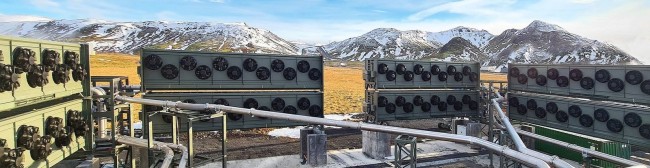
Photo by ClimeWorks

Even with deep emissions reductions, all pathways that limit warming to 1.5°C include carbon dioxide removal. As the field grows, tracking responsible deployment, governance and investment is becoming increasingly important.

The necessity of carbon removal in limiting global warming

Climate modeling scenarios indicate that even with deep emissions reductions, all pathways that limit warming to 1.5 degrees C (2.7 degrees F) include carbon dioxide removal — hereafter referred to as carbon removal or CDR. The amount of CDR ultimately needed depends on how much emissions are reduced in the near term: the more emissions are reduced in the short term, the less CDR will be necessary in the future to meet global climate goals.
 

A diverse suite of carbon removal approaches will be needed

CDR can come from conventional or natural approaches like reforestation, but to effectively manage tradeoffs associated with each approach (including the saturation of natural sinks in the longer term, limited available land area and permanence), we need to develop a broad portfolio of approaches that also includes novel, or technological, CDR approaches.
 

Projecting the scale of carbon removal needed

Climate modeling scenarios show a wide range of reliance on CDR technologies, from less than one billion to more than five billion metric tons of removal annually by midcentury. Limiting future reliance on carbon removal to the lower end of this range will require greater focus on rapid near-term emissions reductions.
 

The role of stakeholders in scaling carbon removal

To reach gigatonne-scale CDR capacity, the public and private sectors and other stakeholders all have a role to play to increase funding for research, development and deployment of CDR technologies, expand enabling infrastructure, and develop robust governance structures that prioritize equity and sustainability.
 

The rapid growth and investment in carbon removal technologies

CDR has already made significant strides, transforming in less than a decade from a little-known concept to a well-defined need, with new technologies attracting billions of dollars in public and private financing. As the industry remains in early stages of development, there is an opportunity to help define standards and best practices for scaling up.

Tracking progress on global outcomes

1974: Technological carbon removal

Status: Well Off Track
Historical Data Methodology and Challenges:

The total number is calculated by summing the annual values reported in the State of CDR report for the following categories: Carbon Removal, Bioenergy with CCS; Carbon Removal, Biochar; Carbon Removal, Bio-Oil Storage; Carbon Removal, Mineral Products; Carbon Removal, Biomass Sinking; Carbon Removal, Enhanced Weathering; Carbon Removal, Direct Air Capture with CCS; and Carbon Removal, Other. These categories together represent the full range of carbon removal approaches included in the total calculation. Calculations for amounts of removal come from a mix of original sources that may have differing methodologies for determining net tonnes removed; some sources may also report gross tonnes removed.

Target Methodology:

The 2030 and 2050 targets for this indicator are based on the range of modeled pathways that limit global temperature rise to 1.5 degrees C with no or limited overshoot, as presented in IPCC 2022. We filtered these pathways to identify a subset of 33 that meet sustainability criteria based on Fuss et al. 2018 for biomass cultivation for carbon removal outlined in IPCC 2018. To minimize unintended negative impacts on food security, biodiversity, and/or net emissions from land-use change associated with accessing biomass feedstocks, we constrained BECCS deployment to an average of 5 gigatonnes of carbon dioxide per year (GtCO2/yr) from 2040 to 2060 (Fuss et al. 2018; IPCC 2018). We used a 90th percentile range (i.e., from the 5th to the 95th percentile) for the 2030 and 2050 levels of technological carbon removal (i.e., from bioenergy with carbon capture and storage, direct air capture, and mineralization, which are the technologies incorporated into integrated assessment models) as 2030 and 2050 targets. More detail on the methodology can be found in Schumer et al. 2024.

We include a target range for both 2030 and 2050 to reflect the uncertainty associated with future need for technological CDR, as well as its dependence on the level of mitigation across sectors. The lower end of the range reflects scenarios in which greenhouse gas emissions reductions are greater in the near term, and future carbon removal reliance is minimized.

The data used to track progress comes from the State of CDR report and excludes projects that use captured CO2 to produce additional oil (i.e., enhanced oil recovery) given life-cycle considerations for the produced oil.

S-Curve Trajectory:

The indicator is classified as “exponential possible” because while it tracks a bundle of new technologies, which may have the potential for nonlinear progress, it is also a public good that is dependent on policy mechanisms. Natural market forces that can propel growth in other clean technologies, like solar photovoltaic and electric vehicles, may not apply to CDR technologies because they are not replacing incumbent technologies or products and generally do not provide a direct service to buyers.

To be defined as carbon dioxide removal (CDR), carbon dioxide (CO2) must be captured from the atmosphere. (This contrasts with capture at a source like a cement plant, which would count as emissions reduction rather than carbon removal, since it prevents emissions from entering the atmosphere.) Carbon dioxide removed from the atmosphere must then be permanently sequestered, including through injection into deep underground geological formations, creation of stable carbonate minerals or use in durable products (such as concrete).

This indicator tracks progress on technological CDR by identifying how many tonnes of CO2 meet this definition each year through engineered, rather than nature-based, interventions.

Based on publicly available data updated through 2025, that number stands at 2 million tonnes of CO2 per year (MtCO2/yr), or less than 1% of the midpoint of the target amount of carbon removal needed by 2030. Publicly available data is fragmented and incomplete, and includes a mix of gross and net removals, so this number includes a margin of error.

Scaling up technological CDR at a rate that puts the world on track for multi-gigatonne scale removal by 2050 and aligns with climate goals will likely require:

  • 30-690 MtCO2/year of CDR by 2030
  • 150-1,700 MtCO2/year by 2035
  • 290-3,100 MtCO2/year by 2040
  • 740-5,500 MtCO2/year by 2050

The recent rate of progress in scaling up technological CDR needs to accelerate significantly to reach even the low end of the range by 2030. However, interest and investment in CDR is accelerating rapidly, so the rate of change will likely accelerate in the future.

Key enablers and barriers to change

1966: Governments investing in carbon removal research, development and demonstration

Historical Data Methodology and Challenges:

No centralized data source was identified. The data collected represents the best available information of governments investing in carbon removal research, development and demonstration.

Government investment in research, development and demonstration (RD&D) is necessary to enable the development of a wide range of carbon dioxide removal (CDR) technologies and approaches. Because CDR is a suite of early-stage technologies and largely a public good, public funding is critical to support its development. A diverse portfolio of CDR technologies can balance tradeoffs associated with any one approach and reduce overall costs.

A handful of countries are already providing public funding for developing CDR technologies, including Australia, Canada, Japan, the United Kingdom and the United States, but much more will be needed to enable the scale of CDR likely needed, particularly as the funding landscape in the U.S. remains uncertain.

Based on available data, twelve countries provided government funding for CDR RD&D in 2024, up from just one in 2019.

1967: Public spending on carbon removal research, development and demonstration

Government investment in RD&D is necessary to enable the development of a wide range of carbon dioxide removal (CDR) technologies and approaches. A diverse portfolio of CDR technologies can balance tradeoffs associated with any one approach and reduce overall costs.

A handful of countries are already providing public funding for developing carbon removal technologies, including Australia, Canada, Japan, the United Kingdom and the United States, but much more will be needed to enable the scale of CDR likely needed, particularly as the funding landscape in the U.S. remains uncertain.

Comprehensive data on the total government funding for CDR RD&D is not available but is important to track in addition to the number of countries providing support since spending can vary considerably by country. One database that tracks research and development — but not demonstration — funding found that among technological approaches, biochar received the largest share of R&D funding, with smaller but increasing shares going toward direct air capture and bioenergy with carbon capture and storage.

1968: Governments providing carbon removal deployment support

Historical Data Methodology and Challenges:

No centralized data source was identified. The data collected represents the best available information of governments providing deployment support for technological carbon removal.

Government support for deployment is important because carbon dioxide removal (CDR) technologies are costly today and opportunities for direct revenue are limited since CDR is largely a public good.

Deployment support can come through a variety of channels, such as investment or production tax credits, loans, government procurement of CDR, grants, tax-advantaged financing structures or government procurement of products made with captured CO2, among others.

Governments in developed economies have a particular responsibility to support deployment of CDR given their higher levels of total historical emissions.

For example, the United States’ 45Q tax credit, created in 2008, provides a credit for each tonne of carbon that is sequestered geologically or used in products, and in 2022, Canada created an investment tax credit that covers 60% of investments for CDR infrastructure.

Based on public documentation and announcements, at least six countries — Australia, Canada, Denmark, Sweden, Switzerland and the United States — provided CDR deployment support in 2024.

1969: Governments funding carbon removal enabling infrastructure

Historical Data Methodology and Challenges:

No centralized data source was identified. The data collected represents the best available information of governments providing funding for enabling infrastructure that directly or indirectly support carbon dioxide removal.

New infrastructure, such as geologic sequestration facilities and CO2 transport systems, will be needed to enable the scale-up of carbon dioxide removal (CDR) technologies. For direct air capture with sequestration (DACS) and bioenergy with carbon capture and storage (BECCS), CO2 pipelines or transport infrastructure by rail, barge or other means would be required when CO2 is captured in a different location from sequestration or use.

The United States, where the vast majority of global CO2 transport occurs, has 5,200 miles of CO2 pipelines today, but estimates suggest 30,000–65,000 miles of CO2 pipeline may be needed in the United States alone by midcentury (CO2 pipelines would enable some types of CDR as well as carbon capture, utilization and storage).

Global geologic CO2 sequestration capacity is estimated to be thousands of billions of tonnes, but further site-specific characterization is needed to determine feasibility. In the United States, for example, legal and regulatory issues related to pore space ownership and long-term site monitoring for leakage or other liabilities need to be clarified, and expedited permitting processes could allow faster project timelines.

Based on available data, 11 governments (including the EU as one government and its member countries separately) provided support for enabling infrastructure for CDR as of 2025.

1970: Companies purchasing carbon removal credits

Historical Data Methodology and Challenges:

Calculation method counts unique companies each year 2019-2022 based on purchase announcement date. Individuals, unknown, and aggregated purchasers were removed from the list.

Along with federal funding, private investment will need to play a role in the scale-up of carbon dioxide removal (CDR) technologies. As companies put forward net-zero pledges, many will need carbon removal to meet their targets — and some are already purchasing tonnes of carbon removal.

As of early 2026, Microsoft is by far the largest purchaser of CDR, having bought around 80% of the 44 million tonnes of CDR sold on the voluntary carbon market. Other major purchasers include Frontier, a coalition of companies including Meta and Google, which has committed to collectively purchase more than $1 billion worth of permanent CDR by 2030. Increasing the number of corporate purchasers will be important to supporting long-term, continued scale-up of CDR.

At the same time, it’s crucial that companies do not use CDR as an excuse to delay emissions reductions. The levels of emissions reductions and CDR needed will vary by company — for example, a heavy industry company will likely have a harder time reducing emissions than a company with emissions predominantly from electricity.

Based on available data, 326 companies purchased tonnes of CDR in 2025.

1971: Corporate spending on carbon removal credits

Historical Data Methodology and Challenges:

The source includes a monthly sales breakdown; our figure displays the December value.

Along with federal funding, private investment will need to play a role in the scale-up of carbon dioxide removal (CDR) technologies. As companies put forward net-zero pledges, many will need carbon removal to meet their targets — and some are already purchasing tonnes of carbon removal.

As of early 2026, Microsoft is by far the largest purchaser of CDR, having bought around 80% of the 44 million tonnes of CDR sold on the voluntary carbon market. Other major purchasers include Frontier, a coalition of companies including Meta and Google, which has committed to collectively purchase more than $1 billion worth of permanent CDR by 2030. Increasing the number of corporate purchasers will be important to supporting long-term, continued scale-up of CDR.

At the same time, it’s crucial that companies do not use CDR as an excuse to delay emissions reductions. The level of emissions reductions and CDR needed will vary by company — for example, a heavy industry company will likely have a harder time reducing emissions than a company with emissions predominantly from electricity.

Corporate spending on carbon removal has increased from around $9 million in 2020 to more than $7 billion in 2025.

1972: Governments considering equity and sustainability in their carbon removal investments

Historical Data Methodology and Challenges:

No centralized data source was identified. The data collected represents the best available information of governments that consider equity and sustainability in their carbon removal investments.

As interest and investment in carbon dioxide removal (CDR) technologies grow, regulations and governance frameworks will need to be created and strengthened to ensure the industry expands equitably and sustainably.

Robust governance structures will be needed at multiple levels — international, national, sub-national and project level. International institutions can strengthen data and inventory systems, ensure robust accounting rules and facilitate multilateral cooperation. National governments can include stipulations around project sustainability, environmental impact and community engagement.

Sub-national governments can ensure that zoning and infrastructure regulations prioritize equity and sustainability. And, at the project level, developers will need to assess the risks, tradeoffs and potential benefits of their project under different circumstances, and then minimize negative impacts and maximize positive impacts.

The United States, under the Biden administration (2021-2025), emphasized these considerations in federal funding awards; other jurisdictions, like Canada and the EU, are beginning to do so as well.

1973: Companies considering equity and sustainability in their carbon removal investments

Historical Data Methodology and Challenges:

No centralized data source was identified. The data collected represents the best available information of companies that take equity and sustainability considerations into account for their carbon removal investments.

As the number of companies purchasing carbon dioxide removal (CDR) credits increases, it is important not only to track carbon removed, but also to understand the quality of these credits in terms of their level of sustainability and social impact. Scaling up CDR technologies that provide a climate benefit while minimizing environmental and social harms will provide the greatest overall benefit.

As the CDR industry develops, companies have the opportunity to set high standards for social, equity and environmental considerations of the projects they invest in. Given the early stage of the industry, this can also set a precedent for project developers and for other companies entering the space in the future.

For example, Microsoft, which is the largest voluntary purchaser of CDR, published criteria for high-quality CDR that include requirements to both minimize and manage environmental harm and demonstrate a commitment to environmental justice. Frontier also includes criteria around community engagement and ecosystem safety in its requests for proposals.

Comprehensive data to track this indicator is not available, as the criteria behind corporate purchases are not always publicly available.

3154: Countries mentioning carbon removal in their Long-term Strategies or NDCs

As countries develop long-term strategies (LTSs) and nationally determined contributions (NDCs) to pursue long-term, low emissions development, some are beginning to plan or consider the use of technological carbon dioxide removal (CDR) to meet these goals.

LTSs are recommended, but not required, so not every party to the UNFCCC has submitted one. As of January 2026, 80 LTSs have been submitted and 27 parties mention they are considering or planning to rely on technological CDR. Bioenergy with carbon capture and storage is most prominently referenced, but direct air capture with sequestration, carbon mineralization and ocean-based approaches are also mentioned in LTS submissions.

Additionally, as of January 2026, five countries mention the possibility of using technological CDR in their NDCs, with four of those also mentioning it in their LTS.

This indicator captures only interest expressed in international climate plans submitted to the UNFCCC. Interest in or plans to use novel CDR may also be expressed in other ways (for example, in climate plans not submitted to the UNFCCC or government funding for research and development), so this indicator is not comprehensive of all expressions of national interest.

5251: Countries committed to reaching net-negative emissions, including through carbon removal

Historical Data Methodology and Challenges:

No centralized data source was identified. The data collected represents the best available information of countries committed to reaching net-negative emissions.

While more than 100 countries have already set net-zero emissions targets, a few are advancing beyond net zero by aiming for net-negative emissions, where carbon dioxide removal (CDR) exceeds continued emissions.

Net-negative emissions are needed to reduce atmospheric CO2 concentrations and help reverse global temperature rise. As evidence emerges that the global community is likely to exceed the 1.5 degrees C threshold outlined in the Paris Agreement, the need for net-negative emissions is becoming increasingly clear.

As of early 2026, only three countries — Finland, Sweden and Denmark — have committed to net-negative emissions, though not yet through legally binding measures. Germany has also indicated its intent to set a net-negative emissions target. While achieving net-zero emissions is already a challenge for many countries, developed countries arguably bear a distinct responsibility to commit to net negative given their historical contribution to the excess CO2 in the atmosphere.

Three countries — Bhutan, Suriname and Panama — claim to already be net negative, though this has been achieved due to their forest cover, not technological CDR.

3153: New scientific publications on carbon removal

Historical Data Methodology and Challenges:

Since this system focuses on technological CDR only, the total number of scientific publications on carbon removal does not cover publications on afforestation or reforestation, coastal wetland restoration, peatland restoration and soil carbon sequestration. Scientific publications include mostly peer-reviewed articles, working papers and books, as tracked by the State of CDR report. Data is available from 2005 to 2025. Data for this indicator is currently limited to English-language publications.

As interest in and funding to scale carbon dioxide removal (CDR) technologies has increased, so has the number of scientific publications focused on novel, or technological, CDR approaches. Tracking changes in this indicator each year provides insight into how much CDR research and data is available and which pathways are receiving significant scientific attention. This indicator could also serve as a leading indicator of interest in the development and demonstration of certain CDR methods.

Nearly 9,800 publications on technological or novel CDR were published in 2025, up from around 5,400 in 2021. This includes papers on biochar, bioenergy with carbon capture and storage, direct air capture with sequestration, enhanced weathering, ocean alkalinity enhancement and ocean fertilization.

3157: News articles mentioning carbon removal approaches

Historical Data Methodology and Challenges:

Data was extracted from Figure 6.4: Number of news media articles per year, CDR method and source. Since this system focuses on technological CDR only, the total number of news articles does not include the ones mention “Afforestation, reforestation, forest management,” “Soil carbon sequestration in croplands and grasslands,” and “Peatland and coastal wetland restoration.” Data for this indicator is currently limited to English-language news articles.

Tracking mentions of technological carbon dioxide removal (CDR) in news articles each year helps indicate the level of discourse on the topic. While media attention may not directly enable deployment, it can influence public understanding and opinion, which in turn can shape policy and project decisions.

Mentions of technological CDR were minimal until around 2007, when coverage focused mainly on biochar and ocean fertilization, followed by bioenergy with carbon capture and storage (BECCS). In 2021, news articles mentioning technological CDR reached 302, with direct air capture and storage as well as BECCS making up a growing share of coverage in subsequent years. Between 2021 and 2025, total news mentions declined each year, reaching 170 in 2025.

3155: Carbon removal start-ups founded

Historical Data Methodology and Challenges:

Data was extracted from Figure 6.4: Number of news media articles per year, CDR method and source in the State of Carbon Dioxide Removal report. Since this system focuses on technological CDR only, the total number of carbon removal start-ups does not cover startups that specialize in forestry, soil carbon, afforestation, agroforestry, peatland and coastal wetland restoration, ocean fertilization, and durable wood products. The eight start-ups that were founded across all years of data yet are no longer active or were acquired by another company have been excluded from our calculations. Data on start-ups is tracked by the State of CDR report and originally sourced from the Net Zero Insights database. 

Reaching gigatonne-scale carbon dioxide removal (CDR) will require the development of a range of technological CDR methods. Tracking the number of start-up companies developing these methods is one indicator of investment and interest in scaling CDR.

The number of start-ups developing technological CDR methods founded each year accelerated after 2015, reaching a peak of 91 in 2022 and falling to 9 in 2025. This indicator reflects only new start-ups founded in a given year, not the total number of CDR start-ups operating in that year.

3156: Operational carbon removal projects

Historical Data Methodology and Challenges:

There is no comprehensive database of CDR projects globally. Existing databases track direct air capture and bioenergy with carbon capture and storage, but not other types of CDR projects.

The number of technological carbon dioxide removal (CDR) projects in operation helps indicate the level of deployment activity on the ground. While each project — depending on the CDR approach involved and other factors — can result in different scales of carbon removed on an annual basis, tracking the total number of projects provides a complementary measure to the total amount of CO2 removed each year and total amounts of public and private investment. One data collection effort in 2024 found just under 200 projects worldwide, with most located in North America.

While there is no database that comprehensively tracks all CDR projects in operation today, Mission Impossible and Carbon Removal at COP reported on this in 2024. Tracking both operational projects as well as those in the development pipeline will be important to understanding the level of activity on the ground, as well as the share of the project development pipeline that becomes operational. 

5244: Share of carbon removal projects with a community engagement component

Historical Data Methodology and Challenges:

There is no centralized data source for this indicator. Further, not all projects publicly disclose their community engagement practices.

Creating opportunities for inclusive and equitable decision-making is essential for responsible development and deployment of carbon dioxide removal (CDR) projects. Meaningful community engagement is necessary to ensure that local stakeholders — particularly groups historically left out of these decisions — have a voice in project siting, design and implementation.

This indicator tracks the number of CDR projects that include formal mechanisms for community consultation (for example, town halls, educational outreach and surveys), ongoing dialogue, and transparent communication about risks, benefits, project operations and potential impacts.

This engagement should extend beyond consultation to incorporate community consent agreements and legally binding benefits agreements. Incorporating procedural equity practices from the outset can help prevent opposition, mitigate negative social and environmental impacts, and enhance the community’s trust in the project.

There is no comprehensive data for this indicator, despite its importance in supporting an equitable CDR industry.

5245: Carbon removal projects reinvesting revenue for local benefits

While carbon dioxide removal (CDR) projects can generate global climate benefits, host communities may be experiencing environmental, social and economic impacts from past harms of industrial development, and potentially from new CDR projects.

To ensure distributional equity, project developers may invest a portion of project revenues into host communities, supporting public services, local infrastructure, education, or workforce training and development.

This indicator tracks the number of projects that include formal commitments to local reinvestment through community benefit plans or agreements, revenue-sharing mechanisms or other project agreements. This reinvestment helps ensure that host communities share in the economic benefits of CDR while mitigating potential disruptions from project development.

There is no comprehensive data for this indicator, despite its importance in supporting an equitable CDR industry.

5242: High-quality jobs created for carbon removal projects

As carbon dioxide removal (CDR) is fundamentally a public good of atmospheric clean-up, its main benefit is global. However, carbon removal projects can also be designed to maximize local benefits, including the creation of local, high-quality jobs.

The economic benefits of CDR deployment should be equitably distributed, including through job creation and workforce development opportunities in host communities. Ensuring local hiring preferences, workforce training programs and equitable access to employment in the growing CDR sector can support economic resilience and long-term community well-being.

Estimates of job creation in CDR indicate a potential for 95,000-130,000 jobs in the United States once annual removal capacity reaches 100 million tonnes of annual removal and 3-9.5 million jobs at global deployment levels of 1.5-5 billion tonnes. Tracking actual job creation against these projections will help refine employment estimates.

There is no comprehensive data for this indicator, despite its importance in supporting an equitable CDR industry.

5253: Measurement, reporting and verification protocols for carbon removal

Measurement (and/or monitoring), reporting and verification (MRV or MMRV) is the process by which the amount of carbon dioxide removal (CDR) is measured, reported and then verified by another party for accuracy. MRV protocols exist within both voluntary and regulatory, or compliance, contexts and lay out the steps needed for recognition in that context; they are foundational for building transparency and trust.

The number of MRV protocols developed per year for technological CDR methods increased from one or two per year in 2020 and earlier to five to 10 per year in 2022-2023. Enhanced rock weathering and biochar saw the most protocols developed in recent years.

Different CDR approaches face varying challenges related to how easy it is to measure carbon removed, whether scientific knowledge gaps remain around how the removal process works and what to measure, and technological gaps in the measurement process.

Additionally, when multiple protocols exist for CDR methods, it can create inconsistency in measurement practices, in how uncertainty is handled, and in other factors. Ultimately, moving toward consistent protocols for each method will help build trust in the industry.

5254: Cost of carbon removal methods

Data challenges