August 11, 2026 — Systems Change Lab today launched its new Freshwater System, bringing together the latest evidence to track global progress across the transformations needed to protect the world’s freshwater. The findings show that action is lagging across nearly every measure assessed.
Freshwater sustains life on Earth, but it is under growing strain. Although freshwater ecosystems cover less than 1% of the Earth's surface, they support nearly 10% of all known species, provide drinking water, sustain food production, generate energy, help regulate the climate, and underpin livelihoods. Yet global action to safeguard freshwater is not keeping pace with growing threats, including climate change, overextraction and land-use change.
Among the 37 outcome indicators Systems Change Lab assessed against key global climate, biodiversity and equity goals and targets:
- Four are headed in the right direction but remain “well off track,” including access to clean water and mangrove restoration.
- Five are headed in the right direction but lack quantitative targets, including surface water and groundwater quality, and heavy metal contamination.
- Eleven are heading in the wrong direction entirely, including groundwater levels, flood risk and water stress.
- Seventeen have insufficient data to track progress, including wetland loss, lake restoration and overfishing pressure.
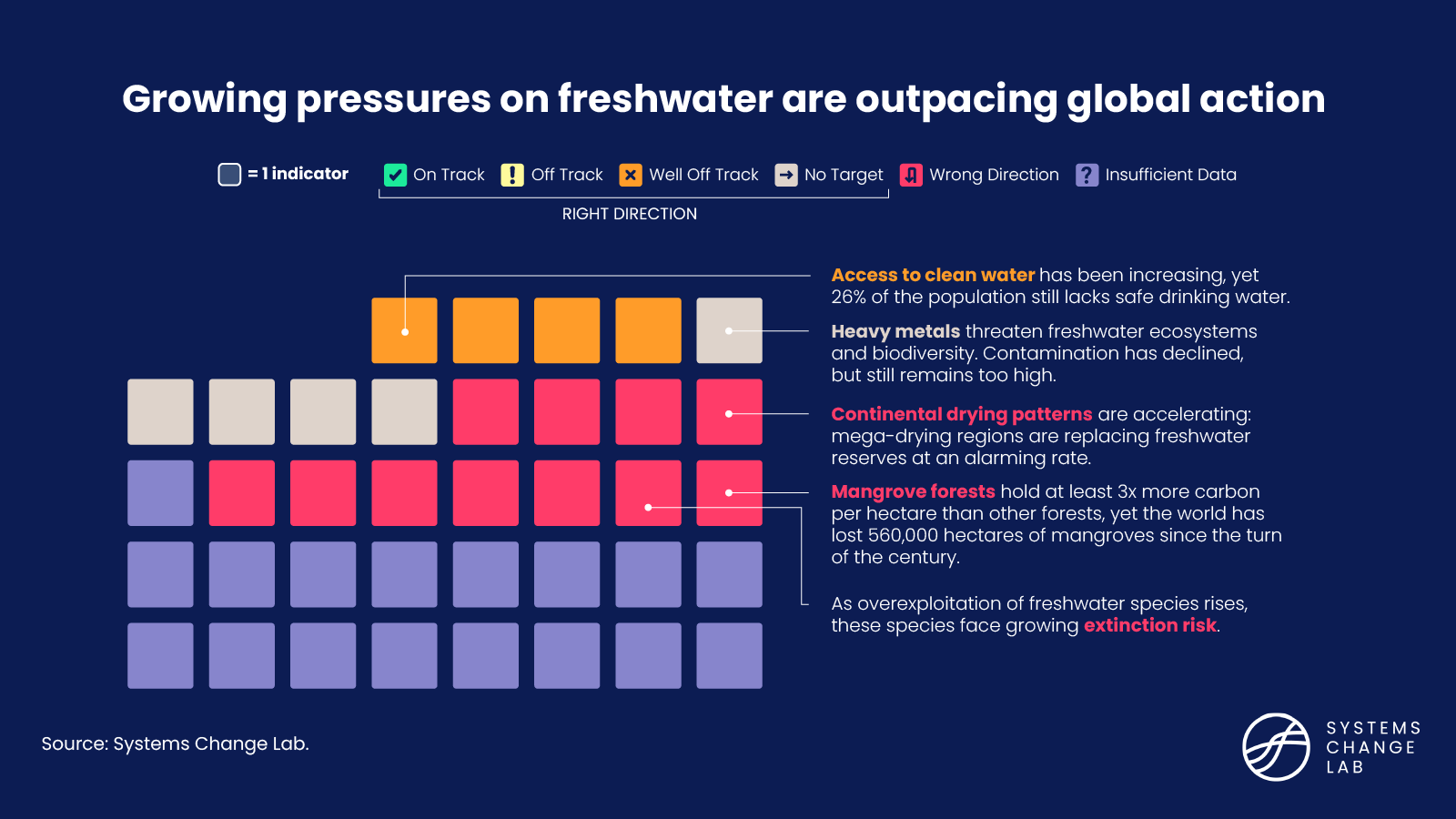
The Freshwater System also includes more than 80 additional indicators examining the conditions that can enable progress, as well as critical barriers to transformational change.
The findings come as growing pressures on the freshwater system are driving increasingly severe impacts. Communities around the world are grappling with rising water stress and scarcity, worsening floods, prolonged droughts and degraded water quality, and billions of people still lack access to clean water.
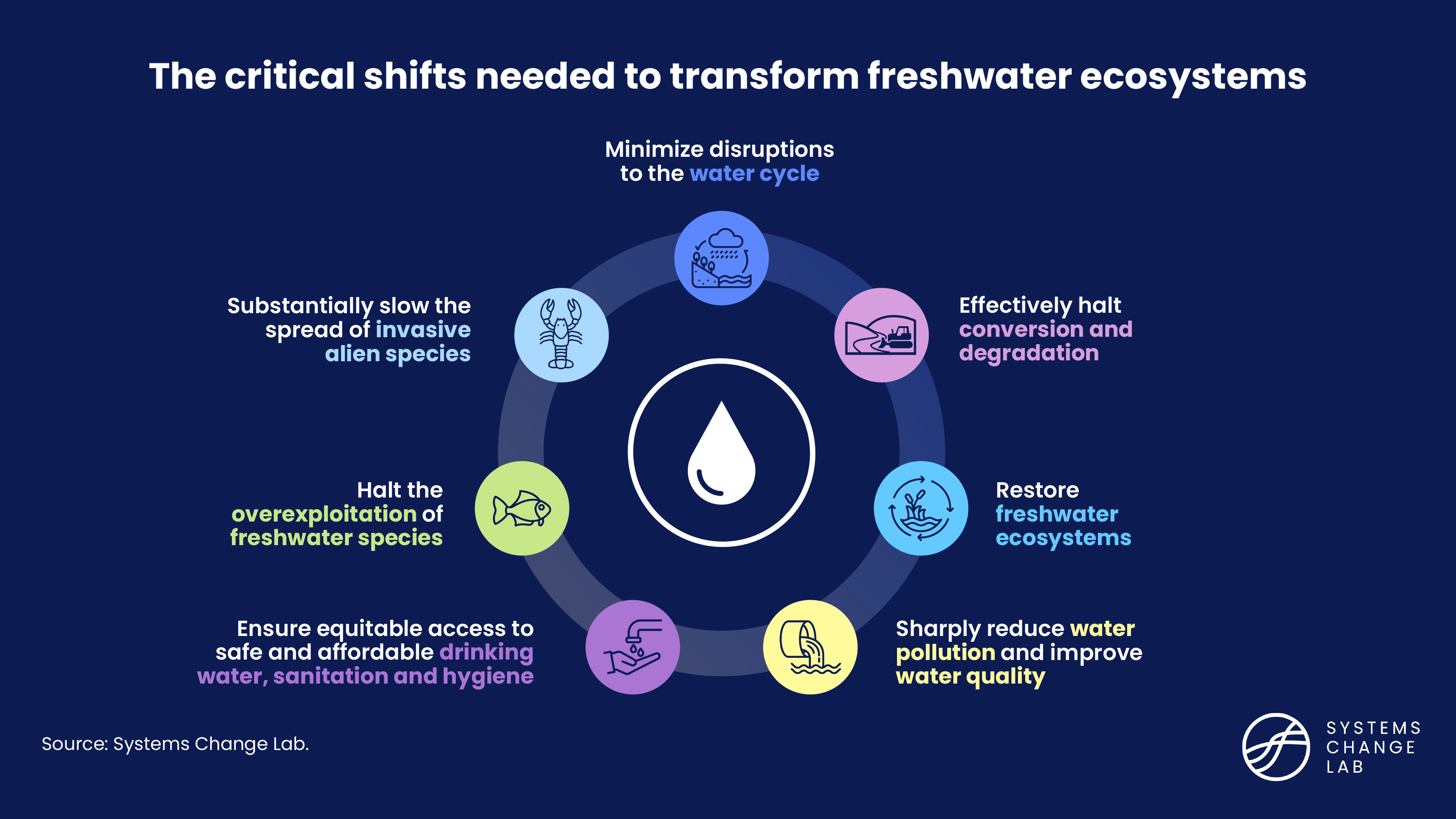
Transforming the freshwater system will require action across several major shifts: minimizing disruptions to the water cycle — including by protecting and restoring freshwater ecosystems — and tackling major drivers of biodiversity loss, such as pollution, overexploitation and the spread of invasive alien species. At the same time, the world must ensure equitable access to safe and affordable drinking water, sanitation and hygiene for all.
Since climate change is driving disruptions to the water cycle, safeguarding freshwater will also hinge on the world’s ability to rapidly slash emissions across power, buildings, industry, transport, forests and land, and food and agriculture — while scaling up carbon removal. In other words, the future of the world’s freshwater system depends on global climate action.