David Hoefler/Unsplash
A closer look at the freshwater system
The global hydrologic cycle — the movement and storage of water through the atmosphere and across ecosystems — sustains life on Earth. Yet human activity is increasingly disrupting this cycle, threatening ecosystems, economies and people’s well-being around the world.
Freshwater underpins life on Earth
As water moves through freshwater ecosystems, some is extracted by people as a water resource, providing drinking water, sanitation and hygiene, supporting agricultural production, generating energy and underpinning livelihoods. Access to freshwater is a cornerstone of sustainable social and economic development.
At the same time, although freshwater ecosystems such as wetlands like peatlands and mangroves, rivers and lakes cover less than 1% of the Earth’s surface, they support extraordinary biodiversity, harboring nearly 10% of all known species. These ecosystems also deliver critical services, including water purification, nutrient cycling, and enormous carbon storage benefits.
For example, wetlands alone store an estimated 20-25% of the world’s soil carbon, and some freshwater ecosystems like mangroves and peatlands rank among the most carbon-dense globally, holding at least three times more carbon per hectare than boreal, temperate and tropical forests. Healthy freshwater ecosystems can also boost resilience to climate impacts, from providing flood protection to reducing the impacts of wildfires.
Human-driven pressures on the water cycle, freshwater ecosystems and water resources are accelerating, driving devastating impacts
Yet, the world is in the midst of a water crisis in many regions as the hydrologic cycle is thrown increasingly out of balance because of human activity. Climate change — driven by emissions across the world’s power, buildings, industry, transport, forests and land and food and agriculture sectors — is altering precipitation and evaporation patterns, increasing the frequency and severity of droughts and floods.
At the same time, land-use change, pollution, overextraction of water, overexploitation of freshwater species, and the accelerating spread of invasive, alien species are degrading freshwater ecosystems at an alarming rate, worsening the climate and biodiversity crises.
Because both inland and coastal freshwater ecosystems play a central regulating role in the hydrologic cycle — governing the storage, flow and quality of water as it moves through landscapes — their degradation destabilizes the cycle itself. These pressures often compound one another. For example, rising temperatures driven by climate change can concentrate pollutants and increase their toxicity, amplifying risks to freshwater species and ecosystems.
The consequences are severe. Since 1970, nearly a third of assessed freshwater ecosystems have disappeared, including more than 400 million hectares of wetlands — an area nearly the size of India. Freshwater species are declining faster than those in marine or terrestrial habitats, with one-fifth of assessed species now threatened with extinction. As ecosystems that store vast amounts of carbon are disturbed, greenhouse gas emissions are also increasing. One estimate suggests degraded peatlands alone are responsible for 4% of global human-driven emissions.
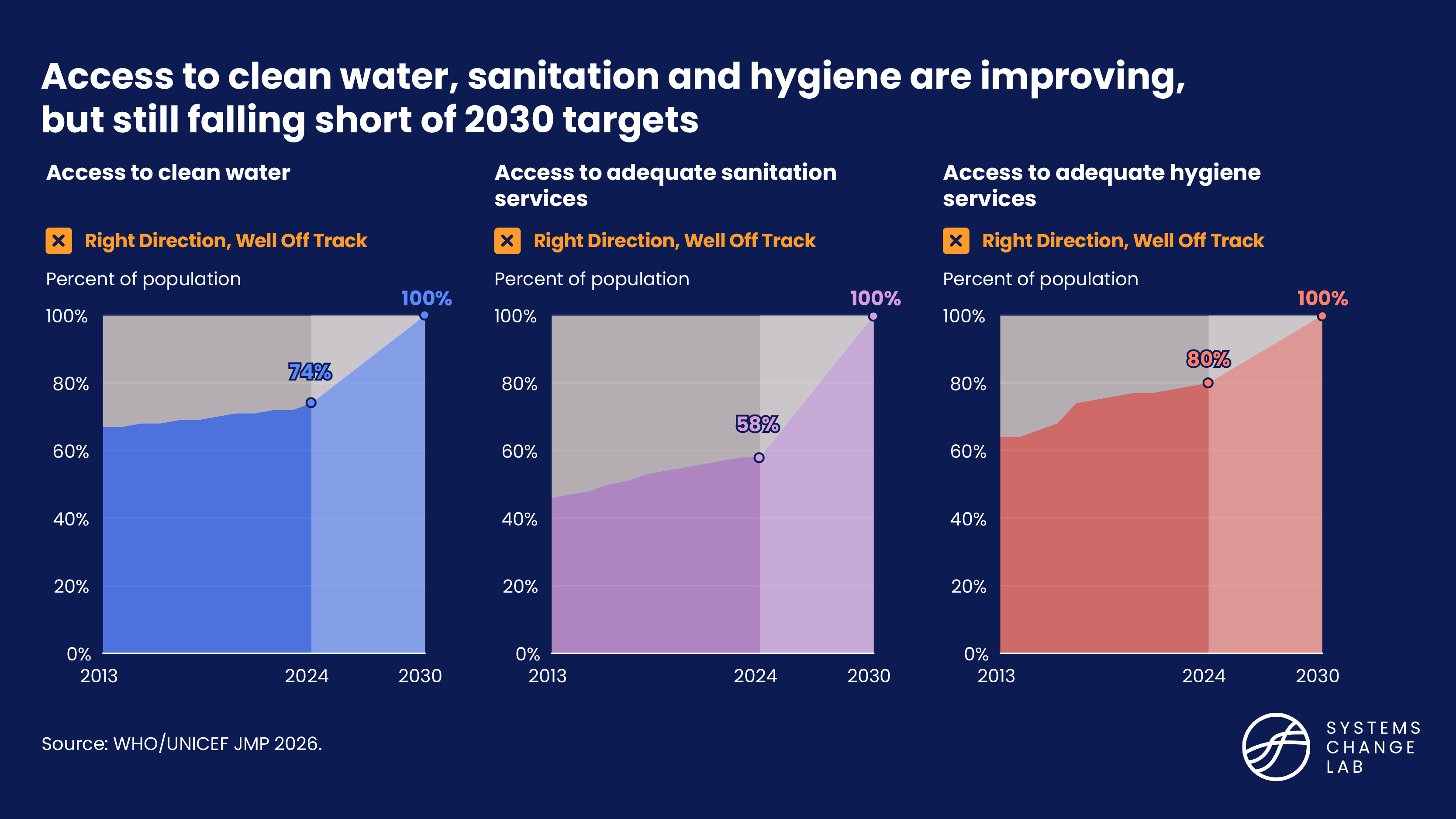
These disruptions are already reverberating through human systems, increasingly threatening lives and livelihoods. Growing water stress and scarcity constrain access to water for domestic use, agriculture and energy systems, while more frequent and severe floods cost lives, displace communities and damage infrastructure. Pollution also degrades water quality, threatening human health, and billions of people still lack access to safely managed drinking water, sanitation and hygiene services.
A unified, accelerated effort can help reverse these trends
Immediate, widespread action across the global freshwater system is needed to address the world’s intertwined climate and biodiversity crises while achieving Sustainable Development Goal 6: ensuring availability and sustainable management of water and sanitation for all by 2030.
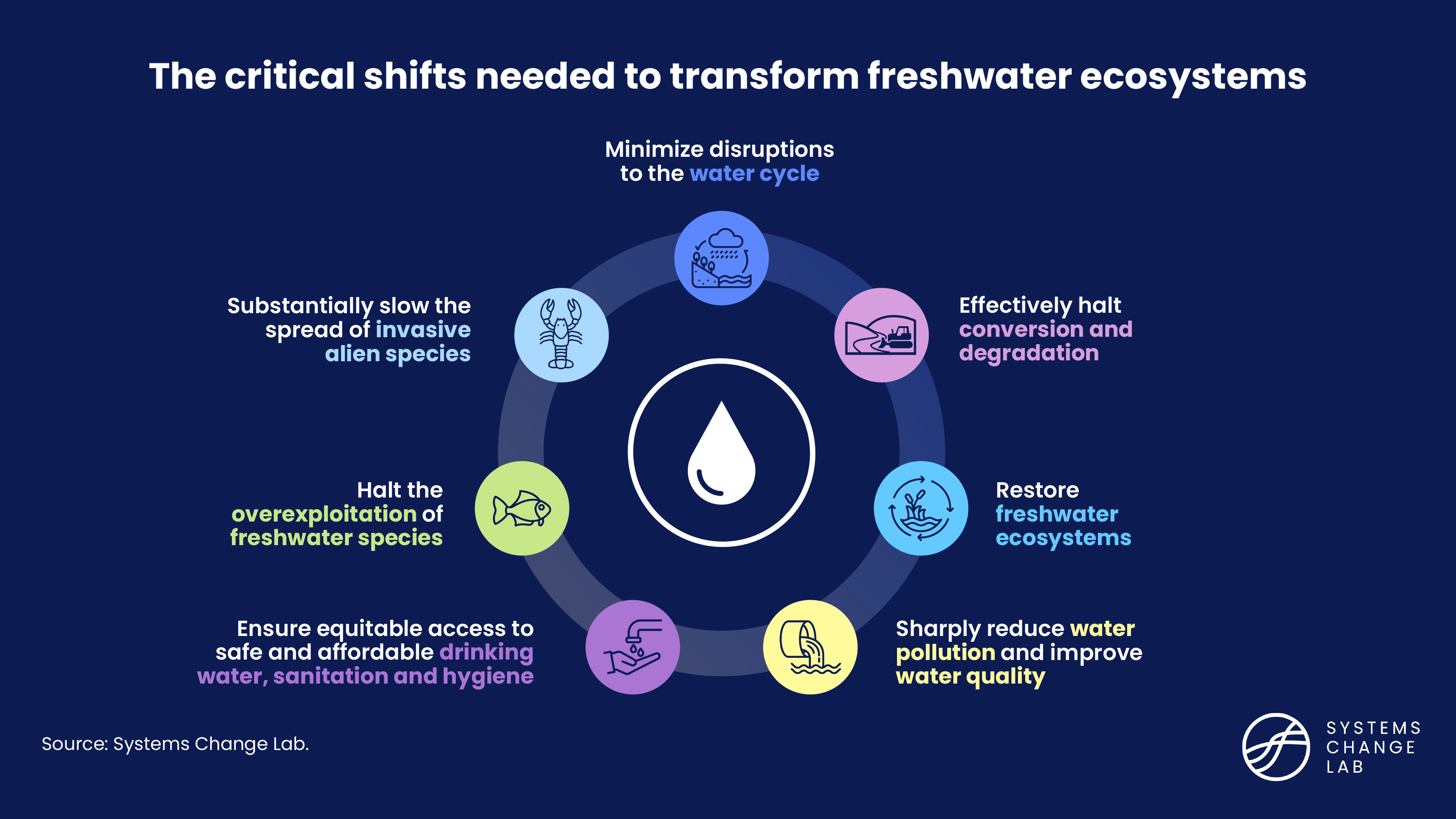
This will mean effectively halting degradation and conversion of freshwater ecosystems — particularly intact, carbon-rich peatlands, mangroves and salt marshes — and restoring those degraded by human activities. These actions will be essential to safeguard the services these ecosystems provide and to minimize disruptions to the quantity and timing of the water cycle.
Alongside these changes, the world must tackle the primary, direct drivers of freshwater biodiversity loss, including by sharply reducing water pollution and improving water quality, preventing overfishing and overexploitation of freshwater species, and slowing the spread of invasive alien freshwater species. Throughout, the world must also ensure equitable and affordable access to safe drinking water, sanitation and hygiene for all. Access to these services is not only a basic human right but the very foundation of human dignity and global prosperity.
Several cross-cutting enablers are essential to achieving progress across all shifts. Strengthening transboundary governance will be critical: Over 60% of the world’s freshwater flows are shared across nations, making coordinated international action indispensable. Securing the land and water rights of Indigenous Peoples, Afro-descendant Peoples, and local communities — who are often frontline stewards of freshwater ecosystems — is equally essential alongside expanding financing and policy support, improving institutional capacity and enforcing environmental laws and regulations.
Transforming the global freshwater system will also require coordinated action on food, forests and land, industry and cities — systems that drive pressures on water resources, ecosystems and the water cycle that connects them.
The shift on invasive alien freshwater species is not yet available online, as the underlying research is still underway. It represents a critical part of the work and will be published later this year.