Photo by Pzavit via Flickr

To decarbonize the world’s buildings, every energy service we use — including heating, cooling, cooking, lighting, and powering electronics and appliances — should be delivered by highly efficient systems powered by zero-carbon electricity.

Decarbonizing the world’s buildings

To achieve this goal, it will be necessary to decarbonize the energy used in buildings. To do this, we must ensure that every energy service we use in our buildings is electrified as much as possible, using the most energy-efficient appliances and equipment, and the electricity used comes from carbon-free sources. This means that while we construct buildings to be zero-carbon and optimize building energy consumption, we also need to switch heating, cooling and cooking equipment from fossil-fueled power to zero-carbon electricity to reduce emissions from energy use in buildings.

The importance of zero-carbon electricity for decarbonizing buildings

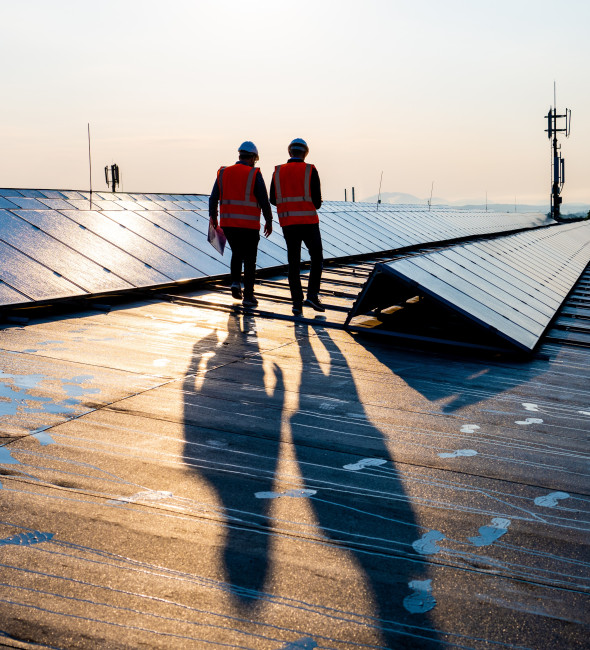
A shift of this magnitude will require a zero-carbon electricity grid. Additionally, an increase in on-site and local off-site renewables such as rooftop solar power or community wind turbines can also help guarantee carbon-free power, especially while electricity from the grid is being decarbonized.

Key technologies for decarbonizing buildings

The technologies needed to decarbonize buildings already exist and are fairly mature. For instance, energy-efficient electric heat pumps have become a key technology for decarbonizing space and water heating. Most active cooling is already achieved through electric fans, evaporative coolers and air conditioners (which are technically a type of heat pump). Reversible heat pumps can supply both heating and cooling.

However, many heat pumps and air conditioners use refrigerants that are known to contribute to global warming. It is therefore important that all newly installed heat pumps and air conditioners use alternative refrigerants to reduce their climate impact.

Other technologies appropriate for heating and cooling include district heating, district cooling and solar thermal heating for hot water. To be sustainable, both district heating and district cooling must rely on a zero-carbon thermal energy source.

The use of biomass as a fuel source is a Paris Agreement-compatible option only when its sustainability is assured and life cycle emissions are near zero. Traditional biomass is also used as a cooking fuel, especially in developing countries, but it has substantial negative effects on health and the environment. Many buildings use fossil gas stoves for cooking, which in addition to emitting climate-damaging carbon dioxide and methane when burned, can also leak methane and hazardous compounds such as benzene even when turned off. Shifting to electricity for heating and cooking — especially highly efficient induction stoves — will eliminate the harmful emissions from both of these sources.

Challenges for adoption of sustainable solutions for building heating, cooling and cooking

There are challenges in scaling up these technologies for heating, cooling and cooking, particularly in existing buildings where retrofits to improve energy efficiency often come with high upfront costs. Behavior change is also necessary, in particular for cooking, where cooking systems can be culturally important and strong preferences for certain cooking equipment exist.

Tracking progress on global outcomes

1787: New buildings that are zero-carbon in operation

Status: Insufficient Data
S-Curve Trajectory:

Operationally zero-carbon buildings rely on both design considerations and zero-carbon technologies. Design considerations are unlikely to follow an S-curve trajectory. However, the deployment of zero-carbon technologies is likely to follow an S-curve, so this indicator may grow along an S-curve if there is a significant increase in the deployment of zero-carbon technologies in buildings.

Ensuring that all new buildings are zero-carbon in operation is the most cost-effective way to decarbonize heating, cooling and appliances. Any new buildings that are not operationally zero-carbon will need to be retrofitted in the next two to three decades in order to meet current climate goals, which will cost substantially more than designing them as zero-carbon from the start.

To advance climate mitigation efforts, all new buildings must be operationally zero-carbon as soon as possible. By 2030, 100% of new buildings should be zero-carbon-ready, meaning they are highly efficient and rely on an energy source that can be decarbonized (primarily, this means electricity that comes from clean technologies).

Unfortunately, global progress remains slow. Only a handful of countries and regions have established the kind of strict building standards necessary to ensure that new buildings minimize their energy demand and supply their remaining energy demand using zero-carbon sources. However, progress is still being made, with net-zero building certifications being introduced by ten of the world’s national Green Building Councils.

There is insufficient global data to track progress on this indicator. However, we know that in 2020, only 5% of new buildings met this definition. In the United States, the New Buildings Institute offers an interactive map to search for information about zero-energy buildings, which is an example that could be implemented in other jurisdictions. 

1788: Carbon intensity of buildings operations

Status: Well Off Track
Historical Data Methodology and Challenges:

Data was calculated by dividing total CO2 emissions by total floor area.

Target Methodology:

The targets for carbon intensity were developed by Climate Action Tracker (CAT), which relied on three lines of evidence to develop quantitative targets for the energy and carbon intensity of buildings. CAT first identified modeled pathways that limit global temperature rise to 1.5 degrees C from IPCC, then filtered them for the following criteria: scenarios were published no earlier than 2018 and have a good regional resolution; BECCS deployment is limited to an average of 5 gigatonnes per year from 2040 to 2060; and carbon removal from afforestation and reforestation is limited to an average of 3.6 gigatonnes of carbon dioxide (CO2) per year from 2040 to 2060 and to an average of 4.4 gigatonnes of CO2 per year from 2050 to 2100. Of the 32 scenarios identified from this analysis, CAT analyzed 24 scenarios that contained buildings variables, as well as another 9 scenarios that focused specifically on the buildings sector. Because they are not economy-wide, these nine scenarios are not included in the filtered scenario set described above; rather, they are specific to buildings and therefore provide greater detail and resolution for this sector. CAT reviewed existing global targets in the buildings sector to gain a second line of evidence to inform target development. CAT searched the academic literature, as well as reports, declarations and commitments from leading multilateral institutions and global multi-stakeholder coalitions focused on decarbonizing the buildings sector (for example, IEA, C40, Global Alliance for Buildings and Construction, WBCSD and the World Green Building Council) for these targets. Finally, a bottom-up sectoral analysis served as the third line of evidence. More specifically, this bottom-up analysis split building sector greenhouse gas emissions and energy use by component — namely, cooling, heating (space and water), lighting, appliances and cooking. CAT then used this information, alongside outputs from a building stock-turnover model, to determine targets for each energy use component for 2030, 2035 and 2050. CAT established the final targets for energy and carbon intensity by merging these three lines of evidence.

S-Curve Trajectory:

The carbon intensity of buildings relies on both design considerations and zero-carbon technologies. Design considerations are unlikely to follow an S-curve trajectory but the deployment of zero-carbon technologies is likely to follow an S-curve, so this indicator may grow along an S-curve if there is a significant increase in the deployment of zero-carbon technologies in buildings.

The carbon intensity of buildings is calculated by dividing the total carbon dioxide (CO2) emitted from energy use, including electricity, by the global total floor area. This indicator differs from the energy intensity of buildings in that it reflects not just how much energy buildings use relative to their size, but also where that energy comes from and how much carbon is emitted from producing and consuming that energy.

For all buildings (which includes residential and commercial floor area), average global carbon intensity has steadily decreased since 2000 due to a combination of relatively stable emissions from buildings and increasing floor area. Between 2018 and 2022, there was an average annual decline of 0.79 kilograms of carbon dioxide per square meter (kgCO2/m2). Despite this trend, recent declines remain far short of the required pace and have been more than offset by increases in floor area, which rose on average by 2% per year between 2010 and 2020. As a result, CO2 emissions from buildings have remained relatively level since 2010.

The carbon intensity of building operations should fall from 39 kgCO2/m2 in 2022 to 13–16 kgCO2/m2 by 2030, 5-8 kgCO2/m2 by 2035 and to 0–2 kgCO2/m2 by 2050. To achieve the 2030 target for carbon intensity, gains made from 2018 to 2022 would need to accelerate by a factor of roughly four.

Currently, space heating is the greatest contributor to emissions intensity from buildings. However, as access to cooling becomes more widespread globally, demand is quickly growing in many places. Further, as temperatures rise, space cooling will likely contribute a larger share of emissions in the future.

Policies banning fossil fuel-based heating and cooking systems have successfully spurred greater electrification of building energy end uses (and simultaneously brought health benefits). However, to reduce emissions, the source of electricity also needs to be decarbonized. Reducing energy intensity by improving the efficiency of energy use in buildings will also be important to minimize the impact on the grid from increased electrification of end uses.

1789: Installed heat pumps

Status: Well Off Track
Historical Data Methodology and Challenges:

The link to IEA’s “Installed heat pump stock by region and global Net Zero Scenario deployment, 2010-2030” has been discontinued. Please visit IEA Heat Pumps for more information.

Target Methodology:

The global target was adopted from the IEA’s "Net Zero by 2050" scenario.

S-Curve Trajectory:

Changes are based on the adoption of innovative technologies. These types of technologies often follow an S-curve trajectory in their adoption if they are successful, but this is not guaranteed.

Progress Assessment Methodology:

For indicators categorized as S-curve likely, acceleration factors calculated using a linear trendline are not presented. The current trend arrow assumes that the indicator continues along an S-curve, fitted to the historical data with a saturation point of 1.8 billion (the 2050 target). Because heat pumps have not yet reached the breakthrough stage of an S-curve, the S-curve trajectory appears fairly similar to what it would with linear assumptions. Our assessment of progress was made based on this extrapolation, as well as a review of the literature and consultations with experts.

Heat pumps are among the most mature, and most popular, solutions for space heating and cooling (particularly in parts of the world that need heating), as well as for water heating. Generally, heat pumps can either be air-source, which exchange warm and cool air from the outside, or ground-source, which use shallow geothermal heat.

In 2020, there were about 177 million heat pumps installed around the world, with roughly 58 million in China, 40 million in North America, and 22 million in Europe. Crucially, heat pumps are powered by electricity, and increasing the number of installations will increase the use of electricity for heating.

It is fundamental that the power system meets its decarbonization targets so electrification in the end-use sectors, a key strategy for decreasing direct emissions, supports the transition toward decarbonization and does not contribute to increased emissions.

Currently, only 10% of heating needs are supplied by heat pumps, and this share needs to double by 2030; however, heat pump sales grew by 13% globally in 2021, with the greatest uptake in cold, northern climates (with a 40% increase in sales in Europe). To achieve a 1.5 degrees C pathway, 600 million heat pumps need to be installed cumulatively worldwide by 2030 and 1,800 million units by 2050. This would require the rate of installations to increase fourfold between 2021 and 2030.

1790: New buildings with on-site renewables

Status: Insufficient Data
S-Curve Trajectory:

Changes depend partly on the adoption of renewable energy technologies, which will likely be nonlinear.

Electricity from renewables is key to sustainably powering heating, cooling and appliances in buildings, and some technologies can also generate heat from renewable sources to supplement electric heating.

Renewable electricity generators such as solar panels can generate electricity to power heating, cooling and appliances in buildings. To supplement electricity, however, some technologies such as solar thermal heaters can also generate heat directly to help decarbonize thermal energy demand for space or water heating.

Increasing the share of buildings producing at least part of their electricity with renewable sources on-site supports progress toward zero-carbon buildings. Each new installation helps to displace fossil fuel-generated electricity and, combined with electrification, decarbonizes building energy use.

On-site renewables, combined with storage to ease the stress on grids, are important to meet the greater power demand expected as electrification levels increase. If they are installed on rooftops, they can also reduce the impact of renewable energy on land use, sparing acreage that is more suited for agriculture or other uses.

There is currently no global data available on the share of new buildings with on-site renewables, although for solar panels specifically, 25 million households used rooftop solar photovoltaic (PV) in 2022, and the IEA Net Zero by 2050 scenario’s target for 2030 sees this number rise to 100 million.

Requirements to install solar panels on new buildings have emerged in places like California, France, Switzerland and Tokyo. Google has developed an Environmental Insights Explorer to help policy development around rooftop solar by showing rooftop solar potential in cities with satellite data. In the United States, Energy Star tracks on-site renewable energy production for commercial buildings.

1791: Renewables in district heating

Status: Well Off Track

District heating systems consist of a series of underground pipes and integrated heaters that provide heat to a network of buildings in a given area. In 2022, district heating provided about 9% of global heating demand for buildings and industry. However, 90% of district heating comes from fossil fuels.

Zero-carbon options for district heating systems include the direct use of renewables. For example, geothermal district heating systems have long existed in countries such as China, Iceland and the United States, while Denmark uses solar thermal energy for district heating. Powering a district heating system with electricity made from renewables can be an option as well.

The global share of renewables in district heating increased from 5.2% in 2010 to 7.1% in 2021. This is well off track to meet the goal of 17% by 2030. The share of renewables in district heating needs to increase over 10 times faster compared to the last five years to meet this goal. Ultimately, this should increase to 100% by 2050.

Key enablers and barriers to change

1780: Countries with zero-carbon building codes

Building codes are a common regulatory instrument used in many countries. They specify health, safety and energy standards, among other criteria, for new and existing buildings. Currently, they are strongly linked with energy performance standards, but they could also be adapted to ensure the use of zero-carbon technologies.

Moving toward zero-carbon building codes requires clear, well-communicated timeframes for increasing the stringency of regulations. Additional incentives, such as tax breaks or grants, are also important to increase compliance and improve enforcement of the regulations. Building codes are particularly effective in combination with a long-term plan to reduce building emissions intensity and the involvement of stakeholders such as developers, owners and tenants.

All countries and jurisdictions should adopt mandatory building codes to achieve zero-carbon operations as soon as possible. Although many countries have building codes (and some have building codes at the municipal or city level), particularly for energy efficiency, few currently have zero-carbon building codes in place. This partially explains the slow increase in the number of zero-carbon buildings, despite the availability and maturity of many technologies needed to implement them.

As of 2023, 30 countries (Canada, China, and the countries of the European Union) have all set codes or guidelines for near-zero- or near-net-zero-energy buildings. A net-zero-energy building produces as much energy from on-site renewables as it consumes, so such initiatives could help move in the right direction toward zero-carbon buildings. However, reorienting codes to prioritize carbon dioxide emissions reductions rather than energy use reductions will more reliably deliver zero-carbon buildings.

1781: Countries with a phase-out date for installation of new fossil fuel-based heating equipment

Space and water heating are responsible for approximately half of building energy use globally, so the phaseout of fossil fuel-based heating equipment will play a fundamental role in decarbonizing buildings. Installing new fossil fuel-based heating equipment slows the pace of emissions reductions, even with improvements in their energy efficiency.

Setting specific dates for the phaseout of fossil fuel-based equipment sends clear signals to the market and supports the uptake of low-carbon and energy-efficient technologies. The number of countries that set phase-out dates indicates progress in the ongoing transition away from fossil fuels.

There is currently no global data monitoring the phaseout of fossil fuel-based heating. However, a partial picture at the national level can give insights into progress; in 2024, the OECD conducted a survey on buildings and climate policy in 28 countries and found that 46% of the countries surveyed had targets to phase out the use of fossil fuels for heating and cooling. In Europe, the European Heat Pump Association published a map showing the progress of fossil fuel-based heating equipment bans.

Though many jurisdictions have recently approved regulations to phase out fossil fuels for heating in new and existing buildings, only some of these actions are driven by climate change mitigation. Following the 2022 Russian invasion of Ukraine, for example, many European countries began seeking to end imports of fossil fuels from Russia. Their strategies include varying degrees of decreased fossil fuel use, including in the buildings sector.

1782: Countries committing to the decarbonization of the buildings sector

Country commitments to decarbonizing the buildings sector can give a clear direction and signal to actors across the built environment. Although there is no global database of countries committed to decarbonizing their buildings, two recent developments offer proxies to monitor progress on country commitments. The Buildings Breakthrough was announced at COP28 and committed to by 27 countries. This initiative is part of the wider Breakthrough Agenda, which provides a platform for international collaboration between national governments to help unlock action in key sectors.

The Declaration de Chaillot emerged from the Buildings and Climate Global Forum, hosted for the first time in 2024, and counts 70 governments as signatories. With its adoption, countries commit to implementing a range of regulatory, financial and governance measures across the value chain to encourage and support the transitions needed in the sector for it to decarbonize. It also establishes an Intergovernmental Council for Buildings and Climate, with the Global Alliance for Buildings and Construction coordinating it and monitoring progress toward implementation.

1783: Heat pumps and air conditioners sold using low or zero global warming potential refrigerants

Both heat pumps and air conditioners put refrigerants through pressure cycles to transfer heat — from outside to inside for heating, and the opposite for cooling. Many commonly used refrigerants, if leaked, contribute to global warming by a factor of dozens, or even thousands, compared to the contributions of the same amount of carbon dioxide (CO2). Cooling needs will also become especially important as climate change causes higher average temperatures. The number of air conditioners in households tripled from 2000 to 2022, driving increased energy use despite efficiency improvements.

The use of refrigerants with low or zero global warming potential (GWP) can minimize the impacts of these devices on the climate. The share of heat pumps or air conditioners sold with low-GWP refrigerants indicates if the best available technology is being used to decarbonize buildings.

There is currently no global data available on the share of air conditioners or heat pumps with low-GWP refrigerants. However, as of January 2024, 156 countries had ratified the Kigali Amendment to the Montreal Protocol, which pledged to phase out the most climate-damaging refrigerants. Major emitters like China and the European Union have begun embedding this commitment in law or regulations. Identifying this data will be important to ensure that the use of these low-GWP refrigerants is trackable.

1784: Companies committed to decarbonize new and existing buildings

Constructing new zero-carbon buildings requires innovative design choices and zero-carbon energy sources, which are often associated with higher upfront costs. Decarbonizing existing buildings similarly requires upfront costs, even though there is a positive long-term financial return —in both new and existing buildings — to decreasing total energy use and increasing energy efficiency.

Initial declarations and investments from companies can reduce costs by increasing demand, provide certainty to the construction industry and improve processes for others. In 2018, the World Green Building Council (World GBC) established the Net Zero Carbon Buildings Commitment, in which actors pledge to eliminate net carbon dioxide (CO2) emissions from new and existing buildings as fast as possible by 2030.

As of July 2024, 143 companies had signed the commitment, alongside 29 cities and 6 states and regions. The World GBC’s Commitment serves as a proxy to track companies’ progress toward reducing whole life carbon emissions, committing to energy efficiency in buildings and committing to zero-carbon buildings/decarbonization of their own buildings.

It is important to note, however, that the framework of net-zero emissions at the building level does not necessarily require zero emissions, but rather allows for the possibility of offsetting some emissions. If carbon offsets must be used, it is of utmost importance that they are properly regulated and verified to remove CO2 from the atmosphere and are used after emissions are reduced as much as possible.

1785: Countries in which electricity price is competitive with gas or oil for heating

Historical Data Methodology and Challenges:

Currently there is no publicly available data source. However, there are some potential data sources available that are behind a paywall. For more information visit: Organisation for Economic Cooperation and Development and International Energy Agency.

Technologies to decarbonize buildings are available, and in many countries some level of support for their adoption exists. Fuel prices, however, impact the lifetime costs of these technologies and affect consumer choices. The number of countries where electricity costs are similar to fossil fuels for heating signals if a change from fossil fuel-based to electric-powered devices is financially attractive to users.

The cost competitiveness of electric heating, particularly with a highly efficient heat pump, versus a fossil gas boiler will be heavily influenced by factors such as grid stability —for instance, the frequency of outages — and the availability of oil or fossil gas. Employing fiscal instruments, such as removing fossil fuel subsidies or changing tax structures, could help incentivize a shift to zero-carbon technologies.

It is vital to ensure that every household can afford to make the switch to electric technologies and that economically vulnerable people are not stuck with antiquated, expensive equipment. It is also worth noting that electricity and fossil gas prices are not the only factors in the ultimate cost to the consumer — modern heat pumps are significantly more efficient than any other heating technology, so consumers will ultimately spend less to achieve the same level of comfort.

Unfortunately, global data on the cost-competitiveness of electricity with gas or oil for heating is unavailable, and prices vary by country. Reporting from government energy agencies provides a source for monitoring the prices of electricity and gas for heating.

1786: Jobs in manufacturing, installation, repair and maintenance of low-carbon appliances

Job creation is an essential component of a just transition. Energy efficiency jobs are important to the global economy because they will provide the effort we need to retrofit buildings to use less energy.

Public spending on energy efficiency creates jobs for workers directly by creating demand for energy efficiency professionals, and indirectly by increasing demand for industries in the supply chains for these technologies. By enacting new efficiency standards for appliances such as washing machines and water heaters, we could create new jobs in installation, component manufacturing and other industries in the supply chain.

It is essential that new employment opportunities provide fair compensation, safe working conditions, equal opportunities and social protections. These jobs must be free of forced and child labor and provide employees the right to organize or discuss work-related issues. Retraining programs may be necessary for workers transitioning out of high-carbon industries.

There is no global data on the number of jobs that have been created in the field of low-carbon appliances (here meaning appliances that use less carbon than non-low-carbon versions), but some regional data is available. In the United States in 2018, more than 500,000 members of the energy-efficiency workforce were in jobs related to efficient appliances and lighting, over 350,000 in jobs related to building materials and insulation, and over 400,000 in jobs related to high-efficiency heating and cooling.

Other shift Other shifts needed to transform the system

Construct zero-carbon buildings

Addressing the emissions embodied in building materials provides a unique opportunity to drive progress across systems. Embodied emissions can be reduced by changing the way we design and construct buildings, improving material efficiency and using alternative building materials.

Optimize building energy consumption

Reducing the energy demand from buildings through behavior change, passive design strategies and energy-efficient appliances can mitigate emissions, lessen energy poverty and increase resilience and energy security — all while creating new jobs.